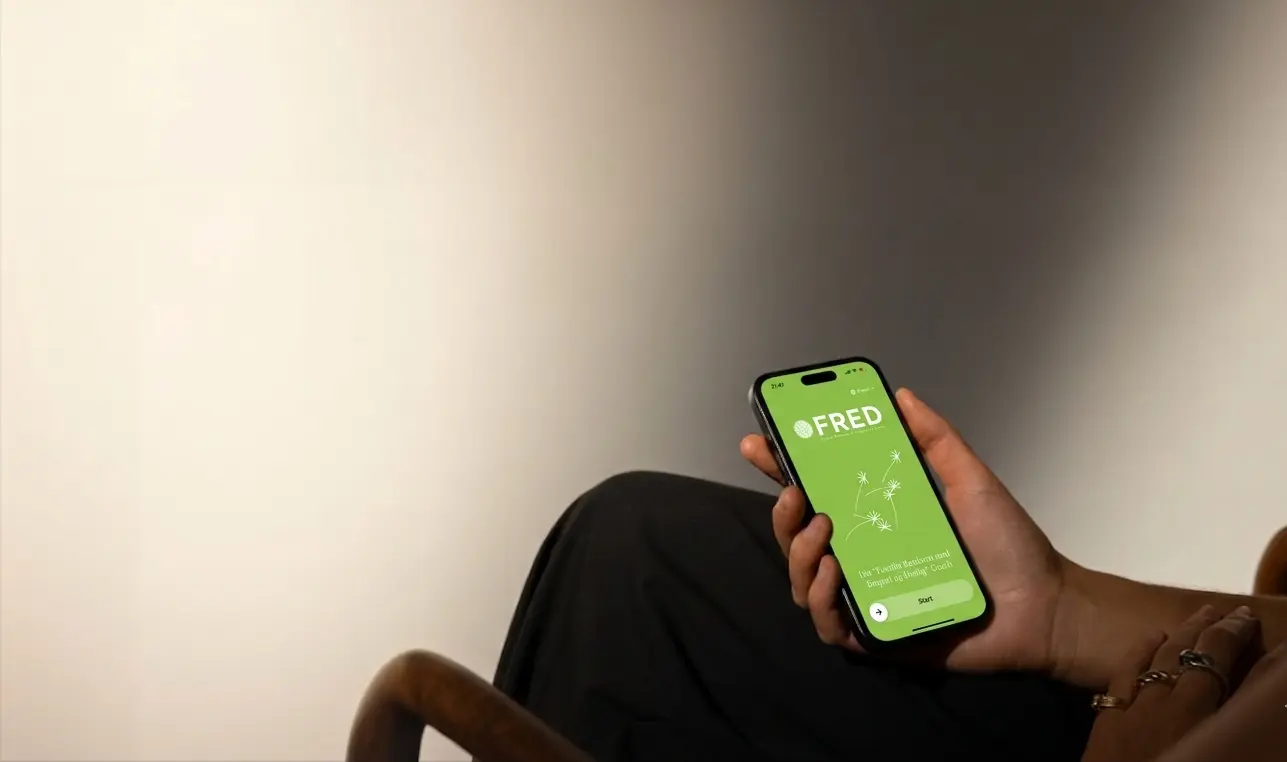
The Child and Adolescent Mental Health Center (CAMHC) of the Capital Region of Denmark (Region H) is developing an app to help parents of children with emotional and behavioral issues to better communicate with their children. The app uses Interhuman's social intelligence signal analysis to adapt interactive AI conversations, enabling parents to build communication skills through realistic, responsive training experiences. In the training experiences, the AI agent responds not just to what parents say, but also to how they say it with their tone of voice and body language.
The Challenge
Currently, mental health services in the municipalities and psychiatry have long waiting lists, leaving child emotional and behavioral problems left to grow. While self-help materials are available, few parents burdened by a child failing to thrive have the mental bandwidth to read self-help books and acquire new skills through self-guided study. Thus, a research team at Region H has developed and is testing a digital solution to make evidence-based parenting training more accessible to parents, while they wait.
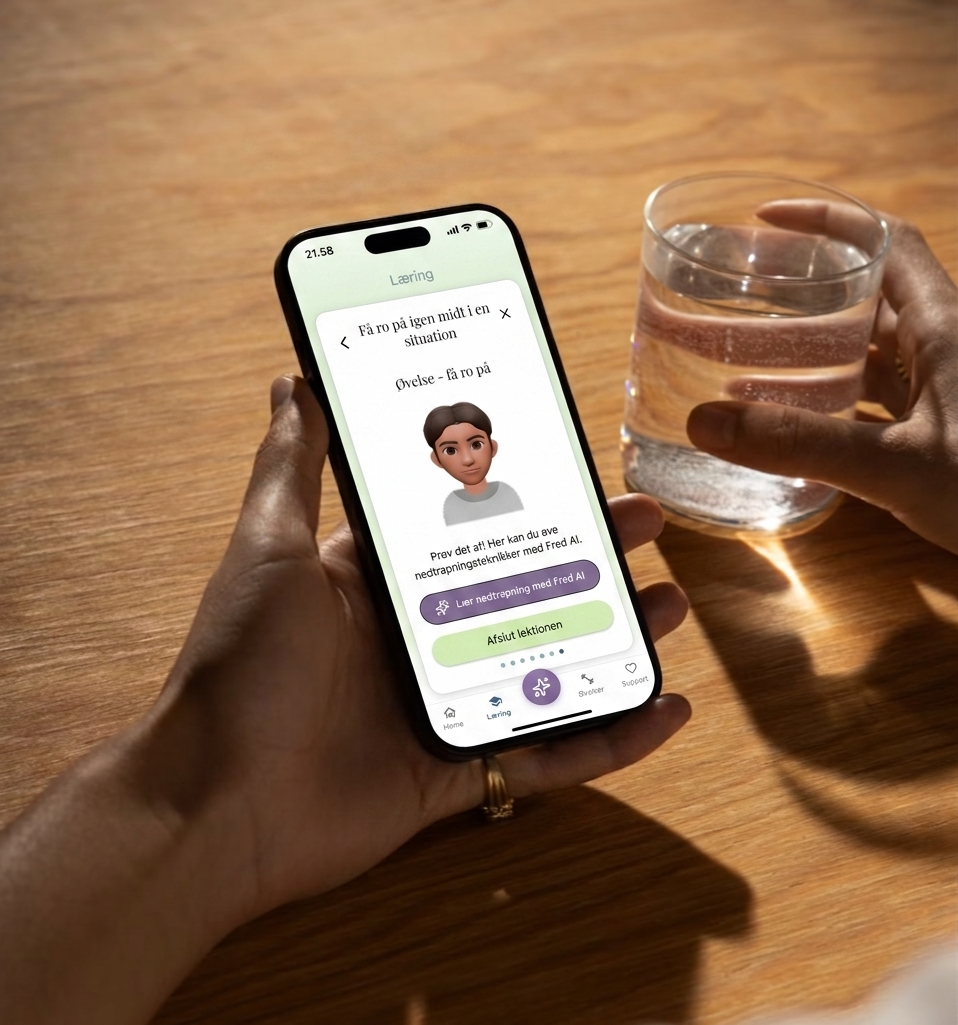
The digital solution includes an AI-counselor for supporting parents in their learning journey and AI-based roleplays with child personas.
This is where evaluating non-verbal communication becomes important.
Nicole Lønfeldt, psychologist and principal investigator of the project, explains:
"Our goal is to have parents learn to be more calm in tense situations and more sensitive to their child's signals. This requires parents to become more aware of their own tone of voice and facial expressions and those of their children to recognize when they themselves and their children are becoming upset. Training in recognizing and expressing nonverbal communication can help parents co-regulate and react as well as react in more adaptive ways."
Simge Genç, a psychologist and neuroscientist by training, currently working as a research assistant on the project, emphasizes the importance of access to parent training:
"It's really important that any parent has access to evidence-based tools when they need them. There's real potential for a digital solution like this to be one of those tools."
Jonathan Bidstrup, UX design student and social welfare consultant:
"In my work as a social welfare consultant, I recognize the picture of families becoming increasingly overwhelmed while waiting for help, as the child's distress continues to grow and becomes ever more unmanageable. As I see it, the app can offer the support and guidance that parents lack during this waiting period, giving them something to lean on in a time marked by uncertainty and many unanswered questions."
Why Interhuman AI
"This is a question of trust. Our application is something new that we haven't tried before", explains Nicole.
Using Interhuman's social intelligence engine, the app introduces a new category of AI-powered coaching - one that understands not just language, but human behavior. By integrating non-verbal signal analysis into interactive roleplay, it enables parents to build communication skills through realistic, responsive training experiences.
"In terms of behavioral coding, we were also looking at a company that has some automatic behavioral coding tools, but it's a black box. So I can't see how their tool is working and why it's giving me the output that it's giving me. And so for research and commercial purposes that doesn't make a lot of sense."
The team configured coaching interactions and two child personas of children struggling to meet parent expectations, with analysis on non-verbal communication powered by Interhuman AI making it possible to adapt the coaching conversation in real time and get role-play feedback post-interaction.
Co-development Process
As part of the development process, the team at Region H and Interhuman AI teamed up to test the AI conversations with practitioners (social workers and psychologists) via workshops, to get feedback early on and inform the iterative development of the interactions.
Two child personas of upset children resisting expectations (school refusal and refusing to do a chore) have been developed and made available for testing by the professionals during the workshops.
Nicole reflects:
"I was very surprised how positive they were about these persona interactions, where they were just thrown into an interaction, with this angry kid that you have to calm down."
Paula Petcu, from Interhuman AI side, adds:
"I was also surprised when they did a role-play that there was a shift from doing the role-play initially, which was challenging and they got feedback on, and then they tried again and were happy they managed to change the behavior of the child."
Jonathan adds:
"The biggest takeaway for me was probably how the roleplays prompted parents to reflect on their own practices, and how the interaction opened up a space for considering the reasons behind the AI child’s reactions and relating these to their own interactions with their child."
One of the parents who has tested the solution and did a roleplay with a child that does not want to go to school:
"I started by saying [to the avatar child] that you have to go to school. I think it's useful learning in relation to how one just starts by saying that you have to. Because that would also be what I would say at home. […] When I think about the situation a little, it's something that would hurt so much. Imagine if he was being bullied and I just said that you have to go to school."
What's Next
This spring (2026), Region H will be testing the first complete version of the app on a community sample of parents looking for help with their children. In the fall, testing will continue with a clinical sample with parents of children who have been referred to the mental health services.
If successful, the solution will fulfill an unmet need - support while on waitlists. The project team projects that the solution will help improve the quality of life for children, relatives, and healthcare professionals, and lower their emotional stress. With increased access to support, it is expected that the digital solution will help bridge resource disparities and reduce pressure in the health care system.
If you're interested in participating in the community study, you're welcome to contact the project team at RHP-FP-BUC-Fred@regionh.dk, and you can read more about the project at getfred.dk.
About the Customer
The Child and Adolescent Mental Health Center (CAMH) is an organization part of the Capital Region of Denmark (Region H) focused on improving child and adolescent mental health by the development of more effective identification, prevention and treatment approaches. The development of the solution is cofinanced by Danish Life Science Cluster and EU.