Tino integrated Interhuman's social intelligence API to analyze non-verbal communication during AI-powered mock interviews used by finance students preparing for investment banking and private equity recruitment. Across early test users from leading universities, feedback has been positive, with users highlighting the value of combined content plus non-verbal analysis.
The Challenge
Tino wanted to add a non-verbal coaching layer to their mock interview experience. Before Interhuman, the feedback focused mostly on spoken content and structure.

"We saw a clear opportunity to help users improve body language, tone, and overall delivery, which are critical in real interviews but hard to coach at scale without specialized signal analysis."
Integration Process
The initial integration with Interhuman AI's API was fast. The Tino team was able to get a working end-to-end prototype in about a week and then iterated over production details (UX flow, retries, analytics logging, and feedback loops).
From a developer experience perspective:
- • API behavior was straightforward to integrate into the existing interview pipeline
- • Iteration was quick with rapid testing of signal output and tuning of product flow
- • The main effort was productization around the API, not basic connectivity.

"The integration was fast, and the biggest value was immediate: users could finally get structured feedback on how they present, not only what they say."
Early User Feedback
Around 100 users tried the feature over a period of 90 days. Early user feedback has been strongly positive, especially around how the feature makes the mock interview feel actionable beyond content alone. Users mention that the non-verbal layer helps them notice habits they weren't aware of — tone, pacing, confidence signals — and that having it summarized at the end of the session makes it easy to apply in the next attempt.
Common positive themes from user feedback:
- • The feedback feels more holistic, closer to what a human interviewer would comment on.
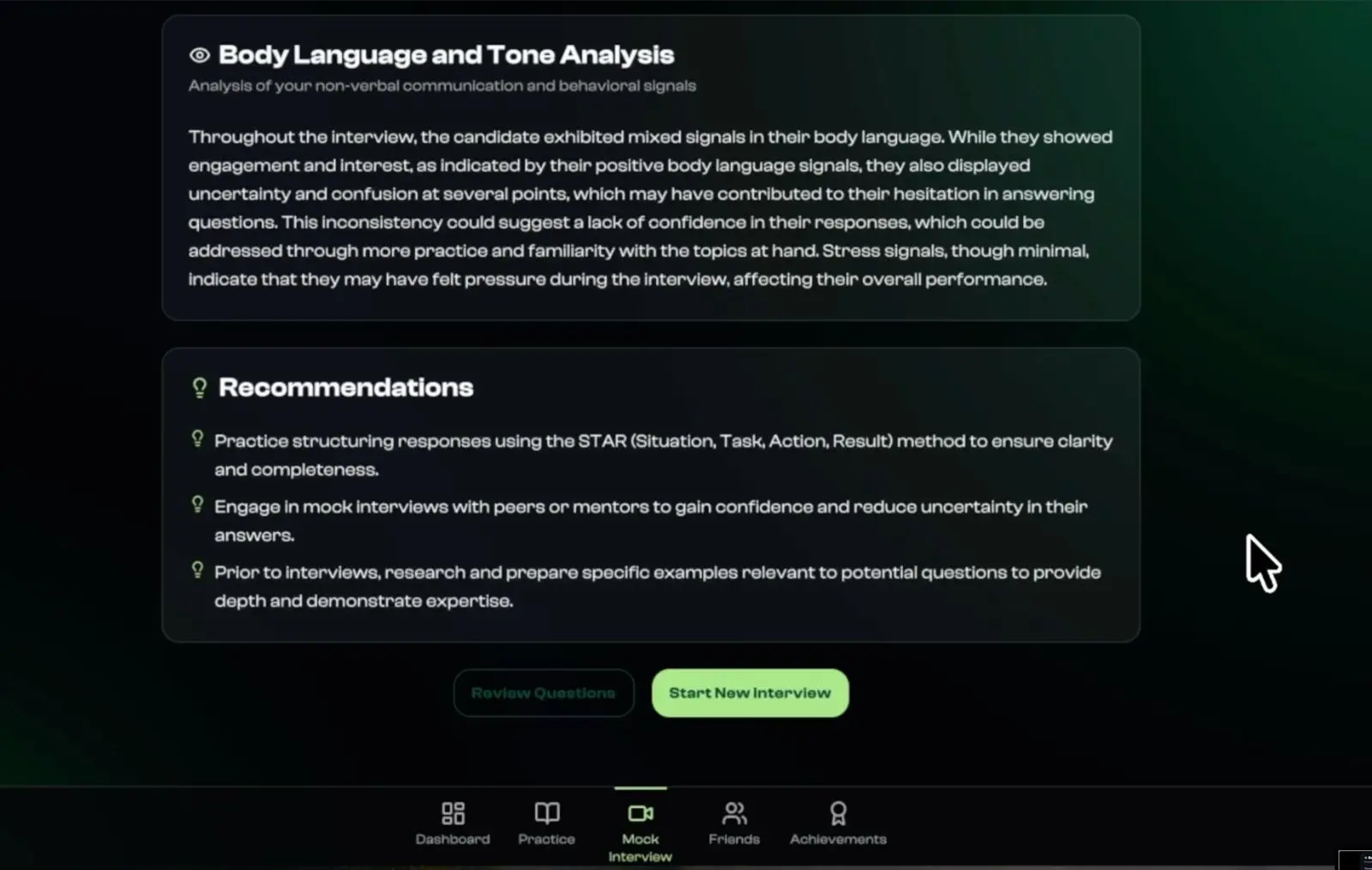
- • The signals are actionable and help users pick one or two concrete things to improve, like tone consistency or calmness under pressure.
- • The experience increases confidence and self-awareness, even for users who thought they already knew their weaknesses.
Pilot Outcomes
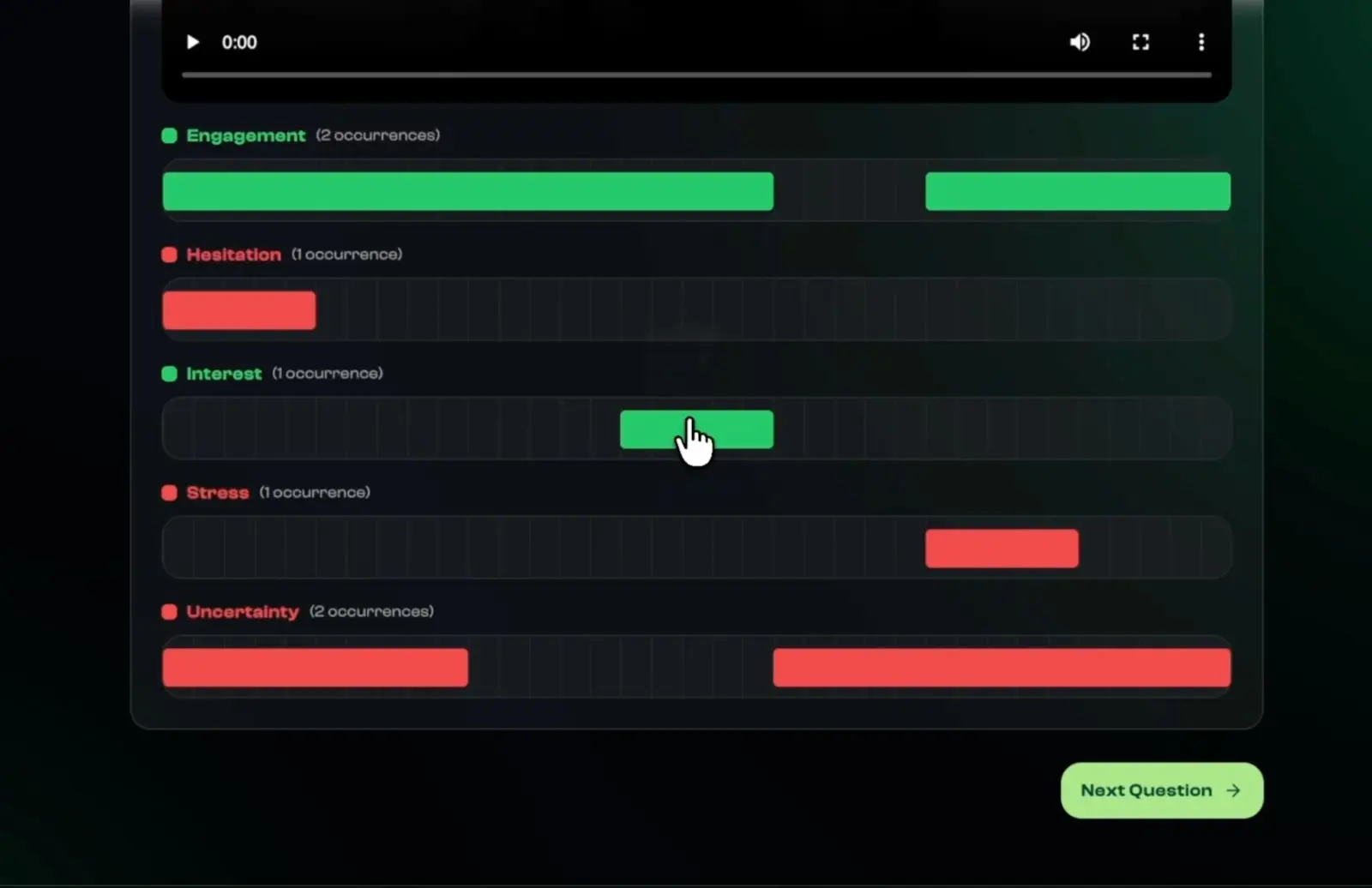
The team at Tino instrumented Interhuman end-to-end inside their product and tracked adoption, reliability, latency, and signal volume to guide product iteration.
So far they've observed:
- • Adoption: Body language analysis is completed in 73.3% of opportunities, indicating that a clear majority of users choose to wait for the non-verbal feedback rather than skipping.
- • Reliability: Zero failures were recorded in the tracked period.
- • Signal Quality: Signals returned are consistent and actionable, averaging around 9.1 signals per analysis.
- • User Retention: Roughly 80% of users return to the mock interview after completing it once
- • Perceived usefulness: About 70% of users rate the body language analysis as highly useful in the post-interview feedback form.
The Tino team reflects on the outcomes:
"Interhuman helped us turn mock interviews from content practice into full delivery coaching — that was a major product unlock for Tino."
What's Next
Interhuman enabled Tino to deliver a new layer of coaching beyond content quality, giving users insights into delivery and presence, with great positive user feedback.
In the early testing, users have expressed a wish for more specific explanations behind detected signals. This early feedback has actually shaped how v1 of Interhuman AI's API (inter-1) now looks. Inter-1 includes the rationale of the provided signals feedback.
Tino plans to continue using Interhuman AI's API in their product, and unlock new features with the release of inter-1.
About Tino
When recruiting for finance roles, Tino founders felt like the process was unmeritocratic. People in investing clubs had an upper hand because they practiced with better materials. That didn't allow the best candidates to shine. Their platform tries to put everyone on equal footing, helping the best candidates get hired. After landing offers at top BB, EB, and PE firms, Tino built the interview prep platform they wish they had. Every single question is taken from real Wall Street interviews. Learn more at thetino.app.